Scheduling and allocation
Move from competing spreadsheets and messages to one current field schedule with project and location context.

Practical frameworks for replacing fragile spreadsheets, improving handoffs and introducing connected workflows without disrupting active project delivery.
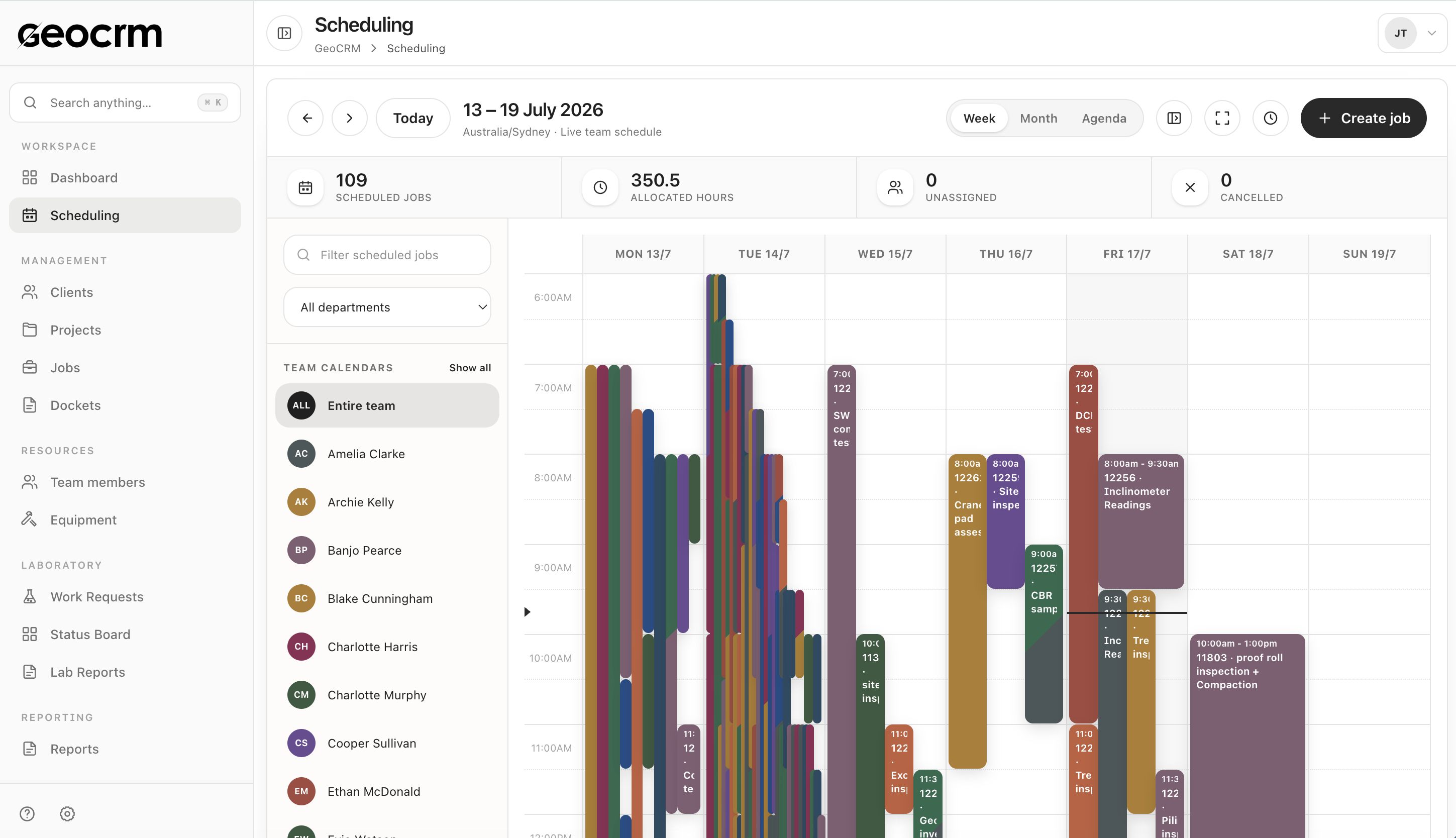
Move from competing spreadsheets and messages to one current field schedule with project and location context.
Define what technicians capture, what the client signs and what the office needs for reporting and invoicing.
Map the states, ownership and information required as work moves from site completion into review and reporting.
Guide
A staged migration plan for projects, field staff, locations and downstream digital dockets.
Read the scheduling guide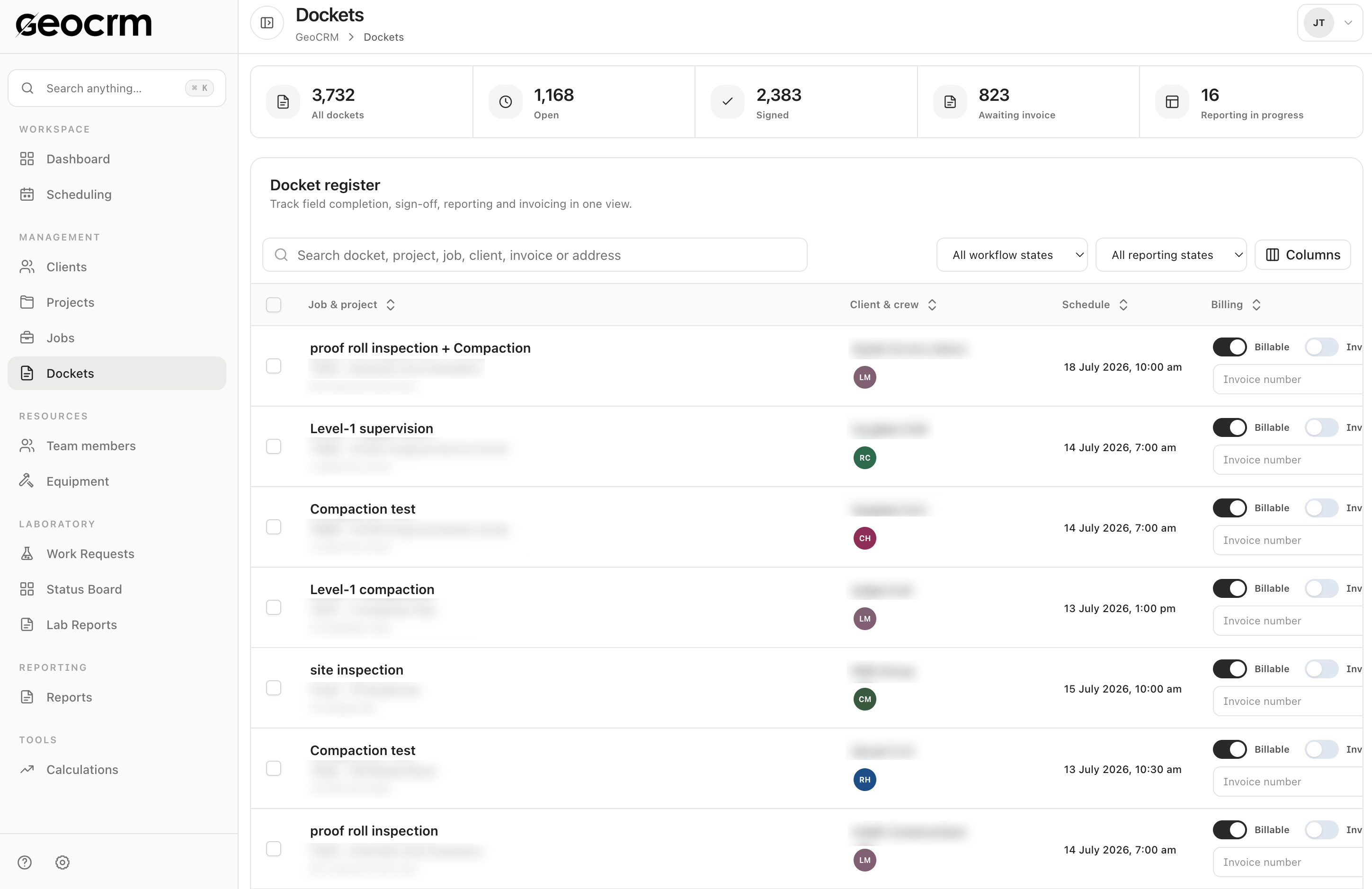
Guide
Design a job-linked field record for work items, evidence, time, sign-off and the next office action.
Read the digital-docket guide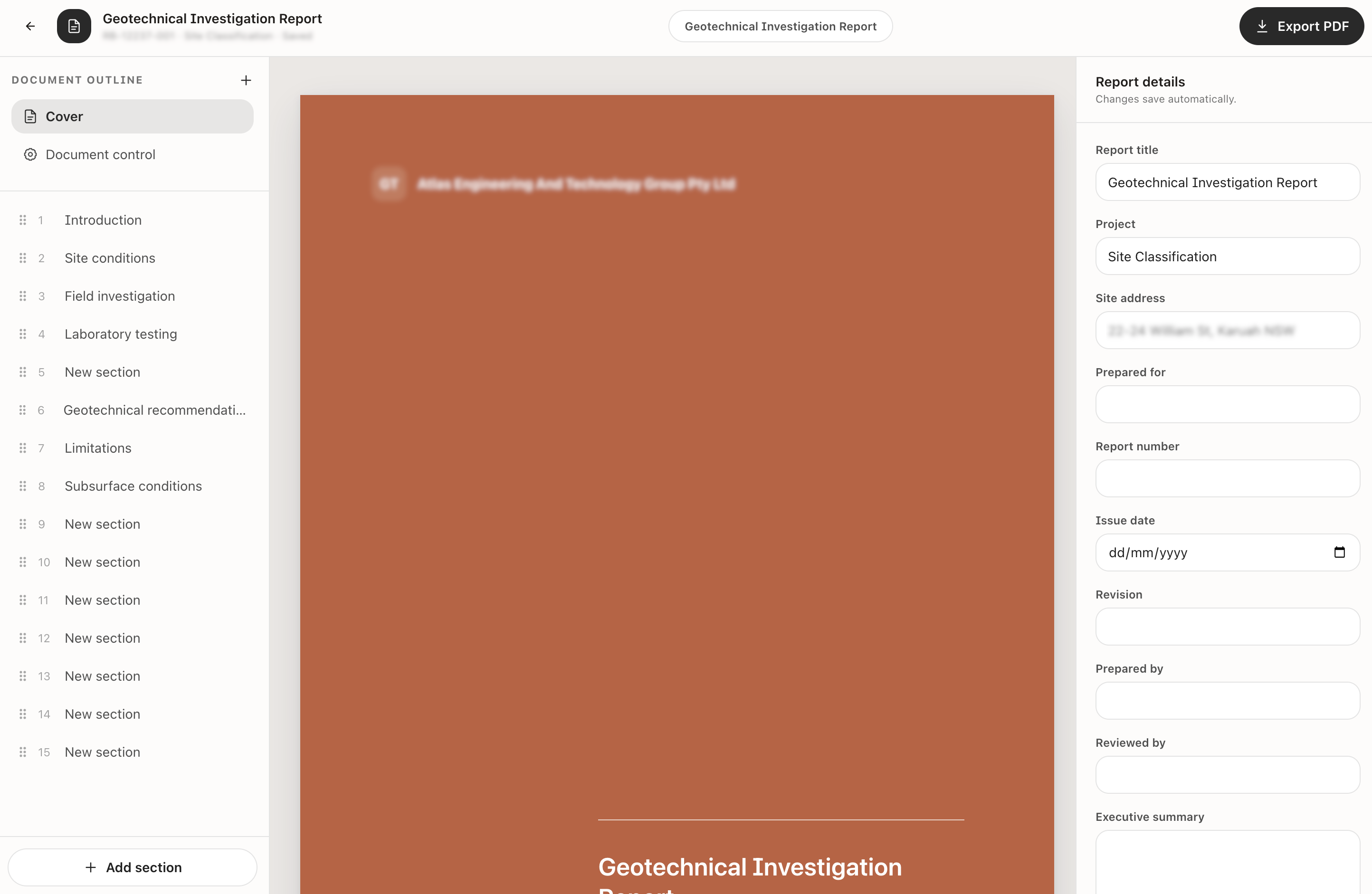
New guide
Define the five stages, readiness rules and ownership needed to move work from site into a controlled report.
Read the field-to-report guideNo. They are written to help geotechnical and testing businesses assess and improve their operating workflows, whether or not they ultimately choose GeoCRM.
No. The default approach is to start with one high-pressure workflow, establish clear ownership and connect adjacent stages after the team trusts the new process.
Yes. Bring the checklist or one representative workflow and we will map it through the relevant GeoCRM screens.
Bring one real workflow
We will map the people, project information and handoffs involved, then recommend the smallest useful starting scope.