The field record is not tied to the correct job
The reviewer must identify the project, site, scope and visit from filenames, messages or technician memory before technical work can begin.

Create a controlled path from project setup and scheduled fieldwork through docket review, reporting ownership, document control and final report preparation—without asking the office to reconstruct the job after the site visit.
The reviewer must identify the project, site, scope and visit from filenames, messages or technician memory before technical work can begin.
Notes, photos, client sign-off, work quantities and time records arrive through different channels and must be reconciled manually.
Fieldwork may be finished while the docket is unsigned, evidence is missing, or the record has not been reviewed for reporting.
The next action sits in an inbox or a verbal instruction, so nobody has a dependable view of which reports are waiting, active or blocked.
Project, site, report number, issue date, revision, preparer and reviewer information is assembled again when the document is nearly complete.
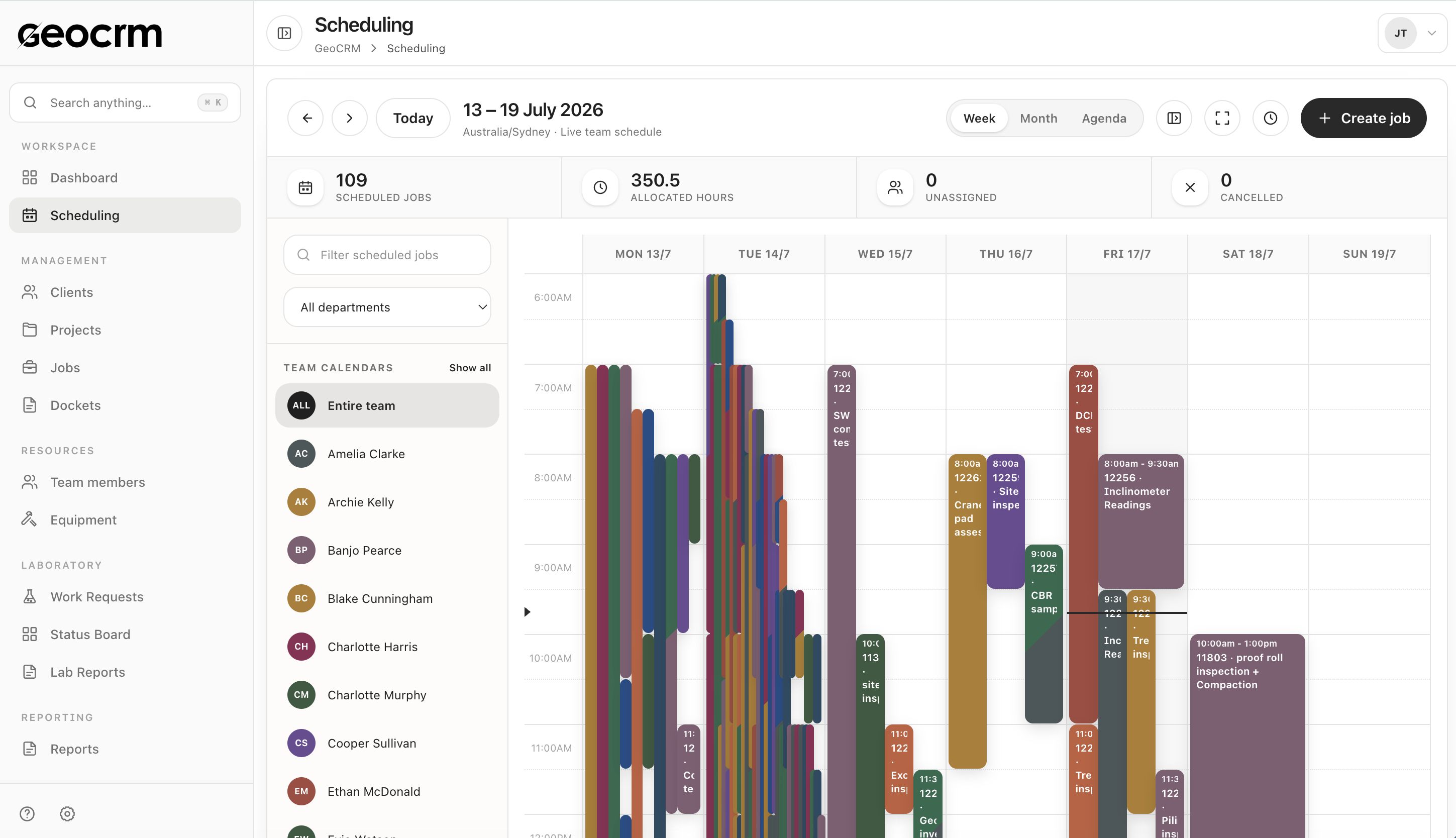
Stages 1–2 · Set up and schedule
Establish the client, project, site or field location, expected work and responsible people. Schedule the visit against that record so the field team begins with a consistent job identity.
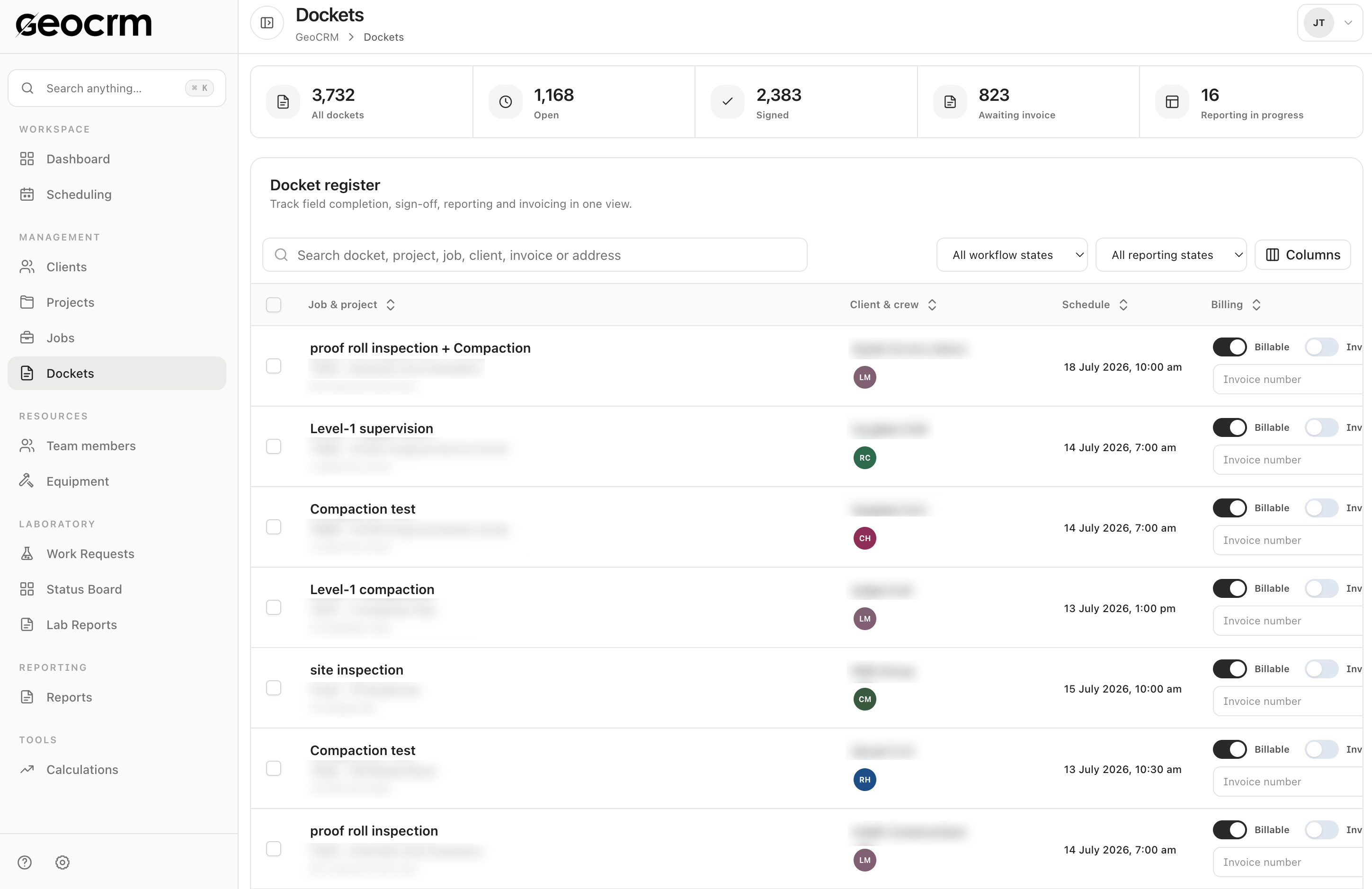
Stages 3–4 · Capture and review
Keep work items, notes, images, hours, travel and client sign-off with the job. Then review completion, reporting and commercial states instead of treating submission as automatic readiness.
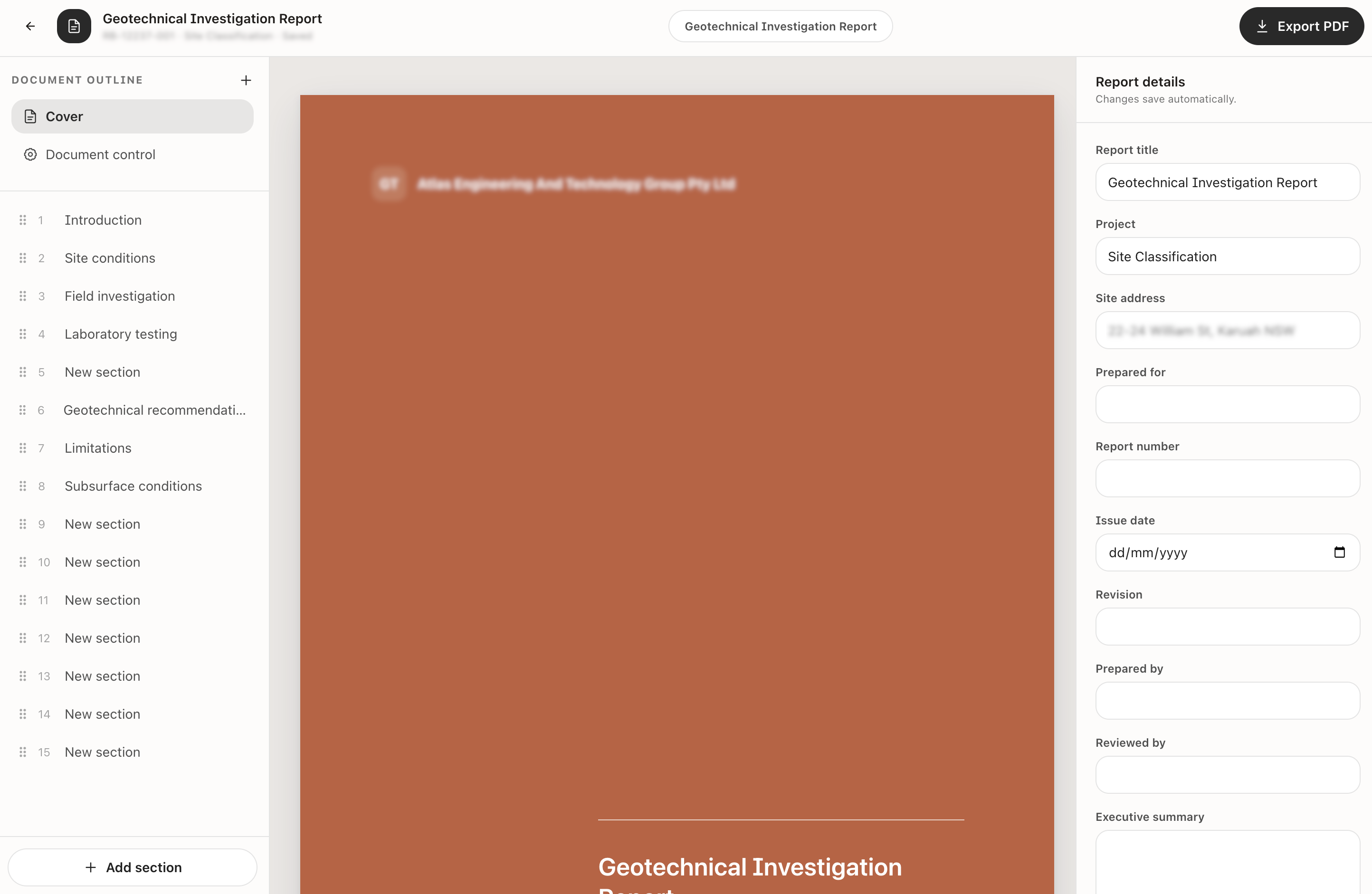
Stage 5 · Prepare and control the report
Prepare ordered report sections, retain the report and project details needed for control, complete the required engineering review, and export the approved document as a PDF.
Select a job and report type the team knows well, with enough volume to observe the process more than once.
Record who creates the project, schedules the visit, submits the field record, checks it, prepares the report and approves delivery.
Define what must be present before the field record is ready for review and what must be checked before reporting begins.
Include a rescheduled visit, missing photo, unsigned docket or revision so the team tests how blockers are identified and owned.
Look for waiting time between field completion, office review, report preparation and approval rather than measuring only writing time.
It is the operating chain that moves a defined project and field job through site capture, office review, report preparation, engineering review and delivery. It includes ownership and status—not only transferring field data into a document.
No. Software can keep records organised and document-control information visible, but technical interpretation, recommendations, checking and approval remain the responsibility of appropriately qualified people.
Not necessarily. Your workflow should define which jobs require a report, what supporting information is mandatory and who confirms that the record is ready for report preparation.
Yes. Start at the handoff causing the most delay. You can establish review ownership and structured reporting first, then connect scheduling and digital dockets when the team is ready.
Use the smallest set that supports action. Common operational distinctions include fieldwork scheduled, field record submitted, review required, reporting in progress, review required, ready to issue and delivered. Adapt the names to your actual responsibilities.
Measure waiting time, missing-information loops, duplicate entry and unclear ownership between stages. Report turnaround alone can hide where the underlying delay is occurring.
Bring one recent field job and report
We will identify the job context, field evidence, review states, reporting ownership and document-control details involved, then show the smallest useful GeoCRM pilot.